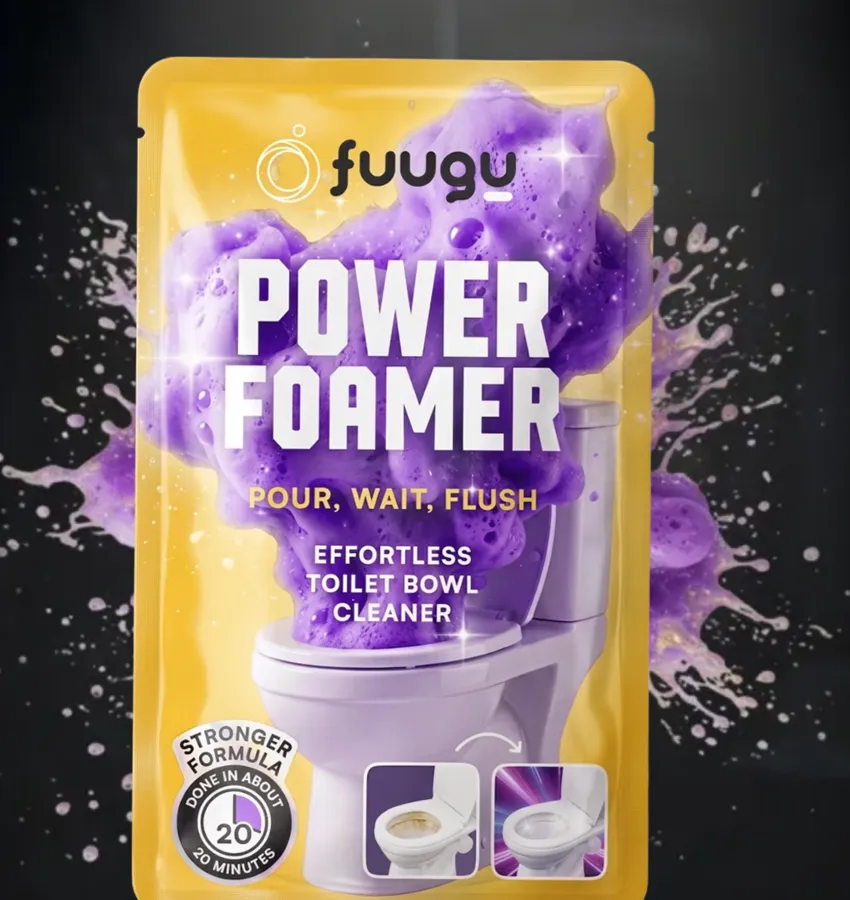
The seller does not publish a full ingredient list on the pages we read, so the honest answer to "what is in it?" is: only what the seller says it leaves out. This guide lists what is known, what is not, and the safety habits that apply to any toilet cleaner.
Fuugu Power Foamer is a powder sold in single-use bags. A powder that foams in water is usually built from a few common building blocks, but we will not guess which ones this product uses. Guessing about chemistry in a bathroom product is how people get hurt. Instead, we set out what the seller states, what to ask before you buy, and how to handle a toilet cleaner safely whatever brand you use.
Known versus unknown
| Topic | What the seller says | What we could verify |
|---|---|---|
| Form | Pre-dosed powder in sealed bags, two bags per box. | Stated only. Bag weight not given on the pages we read. |
| Bleach | No chlorine bleach. | Not verified. No full ingredient list found. |
| Ammonia | None. | Not verified. |
| Quats and biocides | None. | Not verified. |
| Disinfecting | It is a cleaner, not a disinfectant. | Consistent with the absence of EPA registration claims. |
| Children and pets | The terms say the products are not toys and not meant for children. | No claim that it is safe for children or pets. Do not assume it is. |
| Safety data sheet | Not linked on the pages we read. | Ask the seller for it. |
Why the missing list matters. Without the list you cannot check for an ingredient you or a family member react to, you cannot give accurate information to a poison center, and you cannot tell what it might react with. Ask the seller's support for the full ingredient list and the safety data sheet (SDS) before you buy, or at the latest before first use.
What "bleach-free" does and does not tell you
The seller markets the product as free of chlorine bleach and ammonia. That is a useful statement, because mixing those two with other cleaners is behind many household gas exposures. But "bleach-free" is not the same as "harmless". Many effective toilet cleaners that avoid bleach rely on acids or other active agents, and those can irritate skin, eyes and airways. Until the label is in your hands, treat the product as you would any household cleaning chemical: with caution.
The same goes for the words "natural", "non-toxic" and "chemical-free". We do not use them for this product, because we have no document that proves them. Everything is made of chemicals, including water, and a lack of a warning label on a web page is not a safety test.
The mixing rules that matter most
Poison centers in the United States repeat one rule more than any other: do not combine cleaning products unless the label tells you to. Bleach mixed with ammonia produces chloramine gas. Bleach mixed with an acid cleaner, which includes many toilet and rust cleaners, produces chlorine gas. Smell is not a dependable alarm, so never wait for a "strong smell" before you stop.
| If you added this | to a toilet already holding this | Risk |
|---|---|---|
| Any powder or gel cleaner | Bleach or a bleach-based cleaner | Possible toxic gas. Do not do it. |
| Bleach | Ammonia-based or acid-based cleaner | Chloramine or chlorine gas. |
| Two different foaming or acid cleaners | Each other | Unknown reaction. Follow the label of each, which usually says to flush first. |
| Vinegar | Bleach | Releases chlorine gas. Never combine. |
| Automatic in-tank tablets | Any manual cleaner | Check both labels. Many say not to mix. |
For this product, the practical rule is simple: the bowl must contain only clean water and the powder. Flush after any other cleaner and wait before you start. Our how-to-use guide puts this in a step-by-step order.
Safe handling checklist
- Read the label, the box and any insert before the first bag is opened. They take priority over this page.
- Store bags out of reach of children and pets, in a dry place, away from other cleaning products and not in the same cabinet as bleach.
- Tear the bag away from your face. Powder can float. Pour low and slowly to avoid splashing.
- Open a window or run the bathroom fan. Ventilation is a sensible habit even if the product is described as low odor.
- Wear gloves and eye protection if the label asks for them. If the label is silent, eye protection is still a cheap precaution when pouring powder.
- Do not use it on a toilet that has just received another cleaner.
- Close the lid while the foam works, so children and pets cannot reach the water.
- Keep the box, not just the bag, so the label and lot number are on hand if you ever need to call a poison center.
- Throw empty bags away. Do not reuse them for food, craft or storage.
Children, pets and older adults
The seller's own terms state that its products are not toys and not designed for children. We have no evidence about animal exposure. Foaming water in an open bowl can be attractive to a curious dog or toddler, which is why closing the lid and the bathroom door matters most during the wait time. If you share a home with someone who has asthma, COPD or sensitive skin, check the ingredient list first and ventilate more than you think you need to.
For people who find kneeling and scrubbing difficult, a hands-off product is a real advantage, but only when the product is also safe to handle. Powder in a torn bag is easy to spill, so a person with weak grip or limited vision may prefer someone else to open the bag.
First aid basics
These steps are general guidance, not a substitute for the instructions on the product or for emergency care.
If someone swallows it, gets it in the eyes, or breathes fumes, call Poison Help at 1-800-222-1222 in the United States. The line is free, open all day and every day, and connects you to your local poison center. If the person has collapsed, is having trouble breathing or has a seizure, call 911 first. Have the box or a photo of the label ready.
- Skin: rinse with plenty of cool water. Remove contaminated clothing.
- Eyes: rinse with lukewarm running water for several minutes and keep the eyelid open. Get medical advice.
- Inhaled fumes: move to fresh air. If symptoms such as coughing, wheezing or dizziness appear, call Poison Help.
- Swallowed: do not induce vomiting unless a professional tells you to. Call first.
How the FTC angle affects what you read
In the United States, safety claims about a product need evidence behind them before they are published. The Federal Trade Commission says that health and safety claims in particular generally need competent and reliable scientific evidence, and customer testimonials are typically not enough on their own. That is why we do not repeat claims such as "safe for pets" and why you should be wary of any page that does, unless it points to a document, an EPA program label or an SDS. One example of such a label is the EPA Safer Choice program, which reviews ingredients for products that carry its mark. We did not find that mark associated with this product.
Questions to send the seller
A short message to customer support before you order can save trouble. Ask for: the full ingredient list, the safety data sheet, the weight of each bag, the recommended storage temperature, the batch or lot number format, and the exact steps for a toilet with a very high water level or a low-flow flush. Keep their answer. If the seller will not provide an ingredient list for a product meant for your bathroom, that is a reason to look at other options such as those in our cleaner comparison.
If you are still deciding whether the product is credible, our legitimacy review covers who runs the brand and what independent sources exist.
Check the label details yourself
The seller's own page is where any current ingredient or safety information would appear.
See the seller's current offer Opens the seller's website in a new tab. Check the price, shipping cost and return terms on the checkout page before you pay.Frequently asked questions
What are the ingredients in Fuugu Power Foamer?
We could not find a complete ingredient list on the seller pages we read. The seller says it contains no chlorine bleach, ammonia or quats. Ask customer support for the full list and the safety data sheet.
Is Fuugu Power Foamer safe for kids and pets?
We found no proof of that, and the seller's terms say its products are not intended for children. Store it out of reach, close the lid during use and keep children and pets out of the bathroom.
Can I use it with bleach?
No. Never mix any toilet cleaner with bleach, ammonia, vinegar or another cleaner unless the label says it is safe. Flush and wait first.
What do I do if someone swallows it?
Call Poison Help at 1-800-222-1222 in the United States, or 911 if the person is unconscious or struggling to breathe. Do not induce vomiting unless told to.
Is bleach-free the same as non-toxic?
No. Bleach-free only means one ingredient is absent. Other ingredients can still irritate skin, eyes or lungs.
Does it disinfect the toilet?
The seller says no. It describes the product as a cleaner, not a disinfectant.
Related guides
Sources and further reading
- Poison Help (poison.org)
- Poison Help: automatic toilet bowl cleaner, safe to use?
- Poison Help: chlorine gas, get the facts
- Poison Help: identifying unknown fumes in your home
- FTC: Advertising FAQs, a guide for small business
- EPA: Safer Choice program
- EPA: Selected EPA-registered disinfectants
- Seller terms of service
Last reviewed 2026-10-12. This guide is general information for household use. It is not medical advice, and the seller's label and safety data sheet always take priority over anything written here.