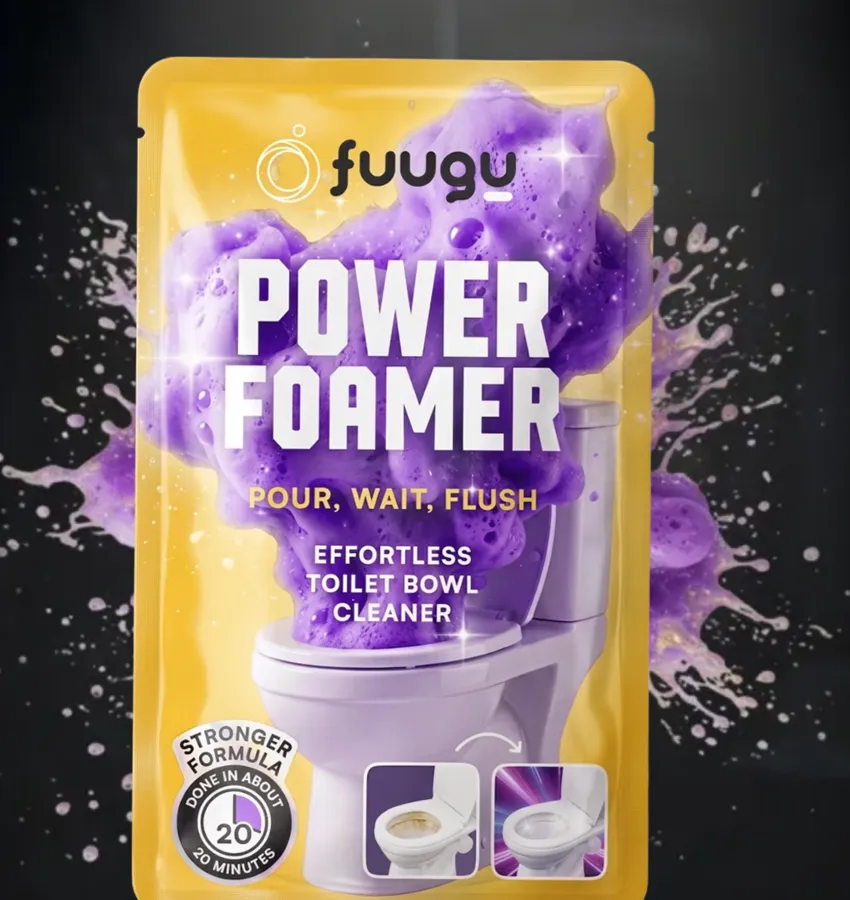
There is no single best toilet cleaner, only the best match for your stain, your water, your body and your plumbing. Six common types are compared here, from foaming powders to a plain brush.
Before the table, one point of context. Independent roundups from outlets such as Bob Vila, Reviewed and NBC Select tend to rate liquid gels highly for weekly cleaning, drop-in tablets for prevention, and acid or scrub products for existing rings. Newer foaming powders such as Fuugu Power Foamer have not yet been tested by those outlets, so in the table below we mark what is seller-stated rather than independently shown.
At a glance
| Type | How it works | Best for | Watch out for | Effort |
|---|---|---|---|---|
| Foaming powder in bags | Dissolves in the bowl and foams up the sides (seller claim for Fuugu) | Hands-off weekly care, people who dislike scrubbing | Little independent testing, ingredient list may be missing, shipping from overseas | Low |
| Liquid gel (bleach or acid-based) | Thick liquid clings under the rim and above the waterline | Weekly clean, light stains | Bleach fumes, mixing accidents, jugs under the sink | Low to medium |
| Drop-in tablets (in tank or bowl) | Slowly release chemicals with each flush | Prevention and fresh smell | Can damage tank parts if the label warns; not for deep stains; not for all septic users | Very low |
| Foaming spray or aerosol | Foam applied by hand, wiped or brushed | Quick refresh, seat and surfaces | Aerosol inhalation, residue, needs wiping | Medium |
| Acid descaler or rust remover | Stronger acid dissolves mineral scale and rust | Heavy rings and rust | Skin and eye irritation, never with bleach, follow the label | Medium |
| Pumice stone or brush alone | Mechanical removal | A single stubborn ring, no chemicals | Scratching if used dry, kneeling | High |
Foaming powders versus liquid gels
Gel is the established format. It is a thick liquid that clings to the bowl wall by viscosity. A foaming powder is a dry product that turns to foam when it meets water. In theory, foam climbs higher and reaches more of the bowl, since gas bubbles rise and a gel can only sag downward. A concept is not a result, though. The seller of the powder says its foam reaches the underside of the rim. We found no independent test to confirm how far it reaches or how it compares with a clinging gel on the same ring.
Points where a powder may genuinely help: it is dry until used (no leaks, no heavy jug), it is pre-dosed (no measuring, no overuse) and it can be stored in a drawer. Points that count against it: a single bag is not a flexible dose, small households may not need a weekly bag and the supply chain is longer.
Tablets versus liquid
People searching "toilet cleaning tablets vs liquid" are usually weighing convenience against power. Tablets release a small dose with each flush, so they suit prevention more than correction. Liquids deliver a larger dose at the moment you choose, so they suit a visible stain. Many tablet labels warn against combining them with other cleaners, and some caution about tank parts. If you already use a tablet, read the label before adding any manual cleaner, including any powder, and do not mix them. Poison Help in the United States notes that automatic toilet bowl cleaners are a common cause of mixing confusion.
Bleach-based versus bleach-free
Chlorine bleach products disinfect and whiten. They do not dissolve mineral scale. Bleach-free products avoid the fume problem and one big mixing hazard, but "bleach-free" does not equal harmless and it does not equal disinfecting. The Fuugu seller says its product does not disinfect, so it covers the cleaning job only. If disinfecting matters, use a product that is on the EPA list of registered disinfectants, applied exactly as its label says.
Pick by situation
Cost per week: the way to compare
Package prices mislead because package sizes differ. Divide the price you pay, including shipping and tax, by the number of cleans the package gives you. A foaming powder with one bag per week gives a clear count: a box of two bags is about two weeks for one toilet, according to the seller. A bottle of gel gives a vague number, depending on how much you squeeze. A tablet label gives a duration in weeks. Put them on the same line, and be honest about how much you use. We work through an example in the price guide.
Which type is easiest on the body
For people who find bending painful, the effort column matters more than the chemistry. Hands-off methods help, but they come with powder or liquid that has to be handled safely. Wear gloves, avoid pouring from a height and ask for help with opening sealed bags if your grip is weak. Whatever you pick, ventilation is the cheapest safety measure you have.
What none of them replace
- A quick wipe of the seat, lid and handle, where most day-to-day contact happens.
- A water fix if the ring comes back every few days: a softener or filter treats the cause.
- A plumber if your toilet leaks, rocks, runs constantly or has cracked porcelain.
Bottom line
Choose the type that fits the problem, not the packaging. For prevention, a tablet, gel or powder all work as a routine. For a ring that has already formed, acids and pumice have a stronger track record in independent roundups than newer foaming products. If you like the hands-off idea, a powder is a reasonable experiment, as long as you keep your receipt and respect the safety rules in the ingredients and safety guide.
Curious about the powder option?
If a pre-dosed foaming powder suits your routine, the seller's own page shows the current listing.
See the seller's current offer Opens the seller's website in a new tab. Check the price, shipping cost and return terms on the checkout page before you pay.Frequently asked questions
Are toilet cleaning tablets better than liquid?
Tablets suit prevention and a fresh smell, while liquids and gels suit visible stains. Tablets release a small dose with each flush, so they are weaker against an existing ring.
Is a foaming powder better than gel?
It depends. Foam may reach higher under the rim, but we found no independent head-to-head test of a foaming powder against a gel.
Which toilet cleaner is best for hard water?
Independent roundups tend to favor acid-based products or pumice for existing hard water rings and gels for weekly upkeep. Always follow the label and never mix products.
Is a toilet cleaner that does not use bleach as good?
Bleach whitens and disinfects but does not dissolve scale. A bleach-free product can be as good at cleaning scale, but it will not disinfect unless it is registered to do so.
What is the easiest cleaner for someone who cannot kneel?
A hands-off product such as a gel, tablet or pre-dosed powder, plus a long-handled brush kept for the toilet. Have someone else open bags or bottles if grip is weak.
Can I use tablets and a powder together?
Not unless both labels allow it. Do not combine toilet cleaners without checking, and flush between products.
Related guides
Sources and further reading
- Bob Vila: best toilet bowl cleaners, tested and approved
- NBC Select: best toilet cleaners
- Reviewed: best toilet bowl cleaners
- Poison Help: automatic toilet bowl cleaner, safe to use?
- EPA: Selected EPA-registered disinfectants
- USGS: Hardness of water
Last reviewed 2026-10-12. This guide is general information for household use. It is not medical advice, and the seller's label and safety data sheet always take priority over anything written here.