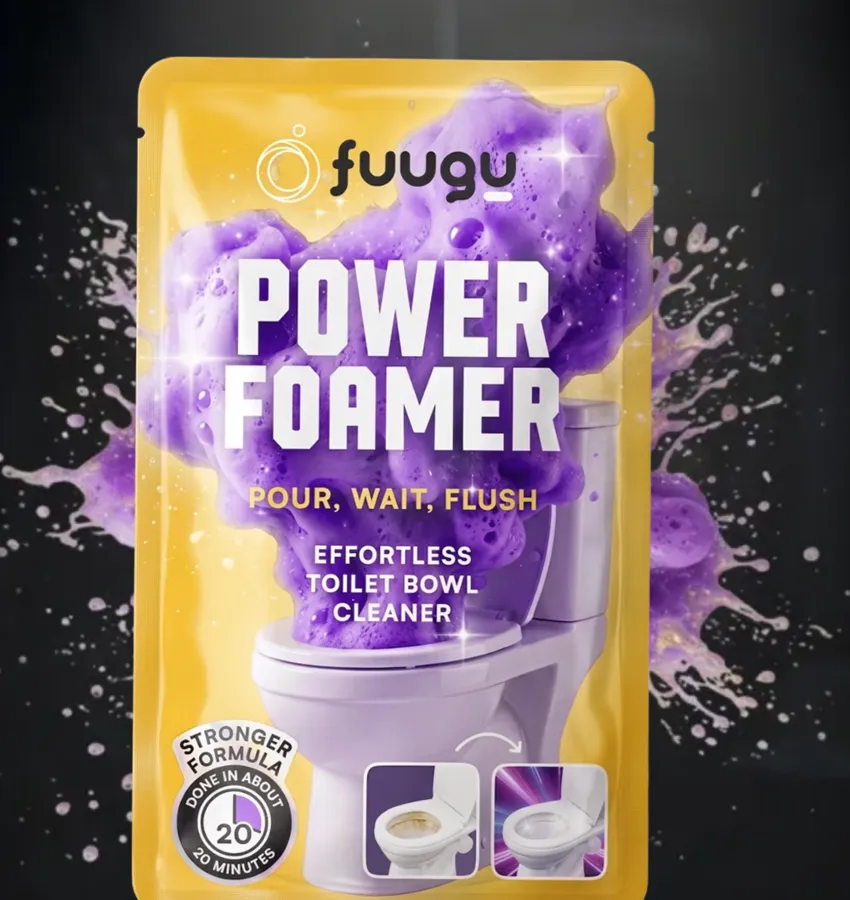
The seller says its toilet cleaner is septic safe when used as directed. That is a claim, not a certification. This guide explains what "septic safe" can mean, what the EPA actually advises, and how you can check for yourself.
If your home is on a septic system, everything you flush goes into a tank where bacteria break down waste. The seller of Fuugu Power Foamer states that the product contains no chlorine bleach, ammonia or quats, and that it is free of biocides, so it should not disrupt the system at one bag a week. Below we look at that reasoning, point out what it leaves open and give you a checklist.
Why septic owners worry about toilet cleaners
A septic tank is a living system. Solids settle, bacteria digest part of the waste and liquid flows out to a drain field. The EPA explains that a septic system relies on microorganisms and advises homeowners to avoid sending harsh chemicals into it. The agency's care guidance names household chemicals such as paints, solvents and drain cleaners as things not to put down drains, and says only human waste and toilet paper should be flushed. A toilet cleaner is a household chemical that is meant to be flushed after use, so its labels and concentration matter.
No cleaner is neutral. Even a mild cleaner adds something to the tank. The practical question is not whether it adds anything but how much, how often and how toxic it is to the bacteria.
What "septic safe" does and does not mean
| Phrase on a label or page | What it can mean | What it does not prove |
|---|---|---|
| "Septic safe" | The maker believes normal use will not harm a septic tank | There is no single federal "septic safe" standard we could find that applies to all toilet cleaners |
| "No bleach, no ammonia, no quats" | Three common biocide risks are absent | That nothing else in the product can affect bacteria or pipes |
| "When used as directed" | The claim assumes the stated amount and frequency | That a double dose or daily use is harmless |
| "Biodegradable" | Ingredients break down over time | That they do so inside a tank at your flow rate |
| EPA Safer Choice mark | Ingredients were reviewed under that program | Not every Safer Choice product addresses septic systems |
What the seller says
- No chlorine bleach, ammonia or quats.
- Free of quats and biocides, so it should not disrupt septic systems when used as directed.
- One pre-dosed bag per toilet per week.
- It dissolves in cold toilet water.
We found no laboratory report, no septic system testing and no safety data sheet link to back that. The claim may be accurate, but at present it is the seller's word. In the United States, the Federal Trade Commission says that advertisers must have a reasonable basis for objective claims, and that claims about safety in particular generally need solid evidence. You are entitled to ask for it.
A verification checklist
- Ask the seller in writing for the full ingredient list and the SDS.
- Ask whether any septic testing exists and who performed it.
- Look for the active agent. Surfactants, acids and oxidizers all have different effects on a tank.
- Check your system's own manual or your local health department for cleaner guidance. Rules and tank designs differ between counties.
- Count your total weekly cleaner use, including tablets, sprays, bleach for laundry and drain products. The sum matters more than any one product.
- Do not use an automatic tank tablet and a manual cleaner together unless both labels allow it.
- Note the date and the amount you used. If your system smells or backs up, you can tell a professional what you added.
How the dose adds up
Take a household with one toilet and one bag per week. That is about 52 bags a year. Whatever one bag weighs, it is flushed into a tank that handles hundreds of gallons of wastewater each week. A household's tank is normally sized for the number of bedrooms, and a family's water use is large compared with a single bag. That is the logic behind "septic safe when used as directed". The same logic stops working if you use several bags, add another cleaner or have a small tank, a failing drain field or a large family on a tank sized for fewer people.
Other things that harm a septic system more than a cleaner
The EPA's homeowner guidance returns to a few habits over and over, and they matter more than a weekly cleaner. Keep grease, wipes, diapers, cat litter and medicine out of the toilet. Spread laundry loads across the week. Fix leaking fixtures. Use a garbage disposal sparingly. Have the system inspected about every three years and pumped every three to five, depending on size and use. The EPA does not recommend septic additives. If your tank is overdue for pumping, a toilet cleaner is the least of your problems.
If you rent or share a system
Ask the landlord or the homeowners' association which products are allowed. Some commercial or shared systems have stricter rules. A cleaner that is fine for a single-family tank can still be on a prohibited list.
When to avoid it and ask a professional
- You already have slow drains, gurgling pipes or odors.
- Your drain field is wet or smelly.
- Your tank has not been pumped in more than five years.
- You use a water-saving toilet and a small, older tank.
- You see any sign of a backup. Stop all cleaners and call a licensed septic professional.
Practical rules for any toilet cleaner on a septic system
- Use the least that works. Do not double a dose for a stubborn ring. Try a mechanical step, as in our ring removal guide.
- Do not stack products. One cleaner per cycle also reduces the mixing risk described in the safety guide.
- Skip drain openers. The EPA specifically advises against chemical drain openers for septic users. Use a plunger or snake.
- Keep records. Write down what you use and when, for the pumping professional.
- Re-check with a professional if anything changes. A gurgle, a smell or a slow drain is a reason to stop and ask.
Our assessment
The seller's argument is coherent: no bleach, no ammonia, no quats and a small, fixed dose. It is also unverified. Until you have the ingredient list and an SDS, treat "septic safe" as an unconfirmed marketing statement, use no more than the instructed amount and watch your system for changes. If you would like an overview of the whole product and company, see the legitimacy review.
Ask the seller before you buy
The seller's page is the place to find current product details and a contact route for ingredient questions.
See the seller's current offer Opens the seller's website in a new tab. Check the price, shipping cost and return terms on the checkout page before you pay.Frequently asked questions
Is Fuugu Power Foamer septic safe?
The seller says it is, when used as directed, because it contains no chlorine bleach, ammonia, quats or biocides. We found no independent testing or ingredient list to confirm it.
What does septic safe mean?
There is no single federal standard that we found for toilet cleaners. It generally means the maker believes normal use will not harm a septic tank, so ask for the evidence.
What does the EPA say about cleaners and septic tanks?
The EPA says septic systems rely on bacteria, that only human waste and toilet paper should be flushed, and that household chemicals and drain cleaners should not go down the drain.
Can I use bleach-free cleaners on a septic system?
They are often a better fit than bleach products, but the dose, frequency and ingredients still matter.
How often should a septic tank be pumped?
The EPA's homeowner guidance suggests an inspection at least every three years and pumping every three to five years, depending on the system.
Should I use septic additives with cleaners?
The EPA does not recommend septic additives. Focus on pumping, water use and what goes down the drains.
Related guides
Sources and further reading
- EPA: How to care for your septic system
- EPA: Frequent questions on septic systems
- EPA: Septic systems overview
- EPA: Safer Choice program
- FTC: Advertising FAQs, a guide for small business
- Seller terms of service
Last reviewed 2026-10-12. This guide is general information for household use. It is not medical advice, and the seller's label and safety data sheet always take priority over anything written here.