A hard water ring is a mineral deposit, not dirt. That one fact decides which methods work: acids and gentle abrasion dissolve or lift minerals, while bleach and most all-purpose sprays mainly change the color.
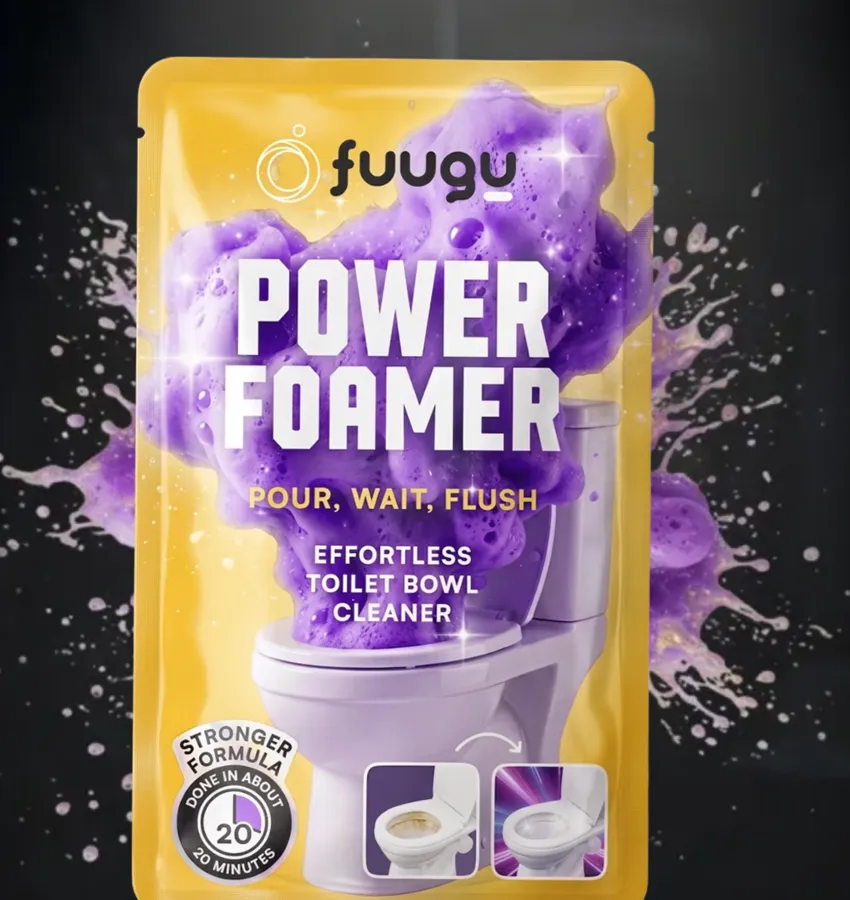
This guide is a ladder. Start on the lowest rung that fits your stain, move up only if it fails, and never combine products. Foaming powders such as Fuugu Power Foamer sit in the middle of the ladder: the seller says they are meant to loosen mineral scale, with a caveat that results vary with water hardness. Where we cover that product, we call the statement a seller claim.
Step 0: Identify the stain
Treating the wrong stain wastes time. Use this table before you buy anything.
| What it looks like | Most likely cause | Starting rung |
|---|---|---|
| White to grey crust or ring at the waterline, rough to touch | Limescale (calcium and magnesium carbonate) | Rung 1 or 2 |
| Cream or yellow-brown ring, smoother | Mineral film plus organic residue | Rung 1, then 2 |
| Orange or rust streaks, especially under the rim or around the fill valve | Iron in the water | Rung 4 (rust remover), not vinegar alone |
| Dark brown or black streaks | Manganese, mold or both | Rung 2, then check the water test |
| Pink or red slime in a film | Bacteria growth | Regular cleaning, not scale removal |
| Thick layer under the rim jets | Scale blocking the jets | Rung 3 and mechanical help |
The US Geological Survey classifies water as soft up to 60 mg/L as calcium carbonate, moderately hard to 120, hard to 180 and very hard above that. If your water supplier's yearly report puts you above 120, expect rings to return unless you remove the cause or clean on a schedule.
The method ladder
Rung 1: Vinegar soak (mild, cheap)
White vinegar is a weak acid, around 5 percent acetic acid. It can dissolve thin mineral film. Lower the water level by flushing while holding the lid open and pushing water past the trap with a toilet brush. Spray or pour vinegar on the ring, wet a few paper towels and lay them along the line so they cling, then leave them for one to several hours. Scrub gently and flush.
Works for: light rings and early buildup. Limits: thick crusts, which need more contact time than vinegar can give.
Rung 2: A foaming powder or gel that clings
The idea of a foaming cleaner is to hold the active ingredient against the wall of the bowl instead of letting it run into the water. The seller of Fuugu Power Foamer says its foam climbs the bowl and under the rim and that heavy scale may take a few weekly cycles. We have no independent test of that claim. Industry-neutral roundups of toilet cleaners, such as those from Bob Vila and NBC Select, tend to favor clinging gels for routine weekly care, and acid-based or scrub-based products for rings that have already formed. Our comparison of cleaner types puts this into a table.
Works for: maintenance and light to moderate rings. Limits: unproven on thick, old deposits.
Rung 3: Pumice stone or a pumice-type scouring stick (gentle abrasion)
A pumice stone is softer than glazed porcelain when used wet, and it lifts mineral layers physically. Wet both the stone and the porcelain, lower the water level and rub gently with light pressure. Stop if the surface feels gritty or you see grey streaks, which can be the stone wearing away rather than the scale. Never use a dry stone.
Works for: stubborn rings at the waterline. Limits: awkward under the rim, and risky on cracked or old glaze.
Rung 4: Commercial descalers and rust removers
Products sold for calcium, lime and rust use stronger acids than vinegar. They work faster and they can irritate skin, eyes and airways. Follow the label exactly: gloves, eye protection, ventilation, the stated contact time, and never combine with bleach or an ammonia cleaner. Flush fully before and after, and rinse the toilet seat if any splashes.
Works for: thick scale and rust. Limits: safety and, for septic households, quantity (see our septic guide).
Rung 5: Fix the cause or call a professional
If rings return within days, the cause is the water. A household water softener or a whole-house filter removes hardness before it reaches the bowl, and a plumber can check scale in the fill valve and the rim jets. A cracked or deeply etched bowl holds stains in tiny pits, and no cleaner will fix that.
What the vinegar and baking soda myth gets wrong
The viral recipe is to pour baking soda, then vinegar, then watch the fizz. The fizz is real, but it is carbon dioxide leaving the water. Baking soda is a base and vinegar is an acid, so they largely cancel each other and what remains is mostly water with a little salt. The cleaning step is the acid sitting against the ring, not the bubbles. If you want the effect of a vinegar clean, use vinegar alone and give it time against the stain. Seller pages for foaming cleaners, including this one, acknowledge that the home method works for light buildup.
Never combine vinegar and bleach, or any acid and bleach. The mix releases chlorine gas. Never mix bleach with ammonia. Keep one product per cycle and flush between them. In an emergency in the United States, call Poison Help at 1-800-222-1222.
Why bleach is not a descaler
Chlorine bleach is a disinfectant and a whitener. It can make a brown ring look lighter but it does not dissolve calcium carbonate. Many people keep adding bleach to a bowl that is really asking for an acid. That wastes money, increases fumes and adds risk. Match the product to the stain, not to habit.
A four-week plan for a moderate ring
- Week 1: vinegar compress. Use the paper-towel method for two hours or overnight. Flush and photograph the result.
- Week 2: a foaming or clinging cleaner on its own day. If you use the seller's powder, follow our how-to-use guide.
- Week 3: pumice, if needed. Wet stone, light pressure, small circles.
- Week 4: maintenance. Pick a weekly or two-weekly schedule and keep it. Rings return faster in very hard water.
Under the rim, without kneeling
The underside of the rim is where scale hides, because water barely touches it and brushes cannot reach. Use a small mirror and a flashlight to see it. A clinging foam or gel is the lowest-effort option. For heavy scale, an angled rim brush or an old toothbrush on a stick, used with a vinegar compress, does the job. If kneeling is a problem, work from a low stool or ask for help once a month, and use the product that needs the fewest steps in between.
Honest limits
- No cleaner removes every ring in one pass. Layers of scale form over years.
- Results depend on water hardness, contact time and bowl condition.
- Foaming products have a niche. For a deep crust, a stronger acid or a pumice stone is more established in independent reviews.
- We tested none of these in a lab. This guide combines the USGS explanation of hardness, label-style safety practice and published roundups.
If you want a quick overview of whether a specific foaming powder is worth a try, our legitimacy check lays out what is known and what is not.
Want to see the foaming option the seller offers?
If you decide to try a hands-off powder, you can read the seller's current listing for yourself.
See the seller's current offer Opens the seller's website in a new tab. Check the price, shipping cost and return terms on the checkout page before you pay.Frequently asked questions
How do I remove hard water rings from a toilet?
Identify the stain first. For light rings, soak the line with white vinegar using paper towels. For thicker rings, use a wet pumice stone gently or a labeled descaler, one product at a time and never with bleach.
What causes limescale in a toilet bowl?
Dissolved calcium and magnesium in hard water leave solid deposits as water sits and dries at the waterline.
Why are there brown or orange stains in my toilet?
Often iron in the water. Brown and black streaks can also be manganese or mold. Rust needs a rust remover rather than vinegar alone.
Does vinegar and baking soda remove toilet rings?
Mostly no. The two largely neutralize each other. Vinegar alone, left in contact with the ring, is more useful.
Can Fuugu Power Foamer remove hard water rings?
The seller says it is designed for hard water rings and limescale, with results varying by water hardness and heavy scale possibly needing several weekly cycles. We found no independent test.
Is it safe to mix toilet cleaners to remove a stubborn ring?
No. Mixing cleaners, especially bleach with acids or ammonia, can release toxic gas. Use one product at a time and flush between them.
Related guides
Sources and further reading
- USGS: Hardness of water
- Poison Help: chlorine gas, get the facts
- Poison Help: identifying unknown fumes in your home
- Bob Vila: best toilet bowl cleaners, tested
- NBC Select: best toilet cleaners
- EPA: How to care for your septic system
Last reviewed 2026-10-12. This guide is general information for household use. It is not medical advice, and the seller's label and safety data sheet always take priority over anything written here.